
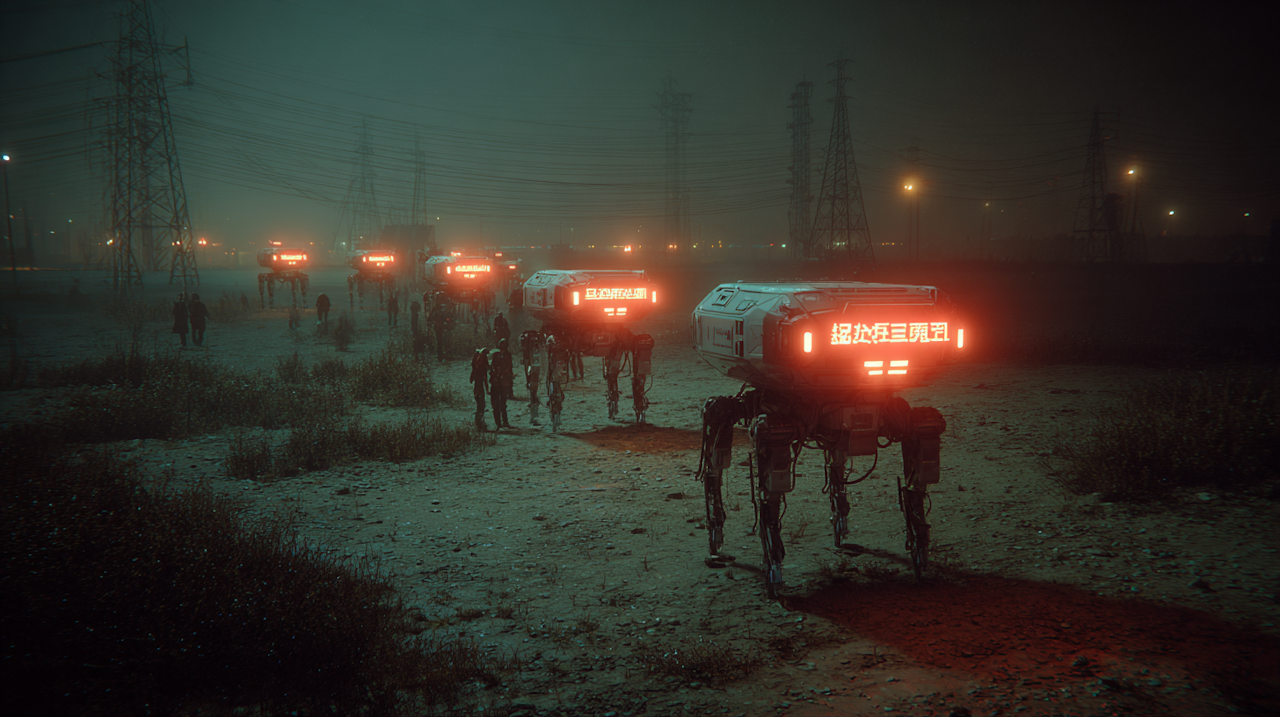

Tiny “talking” robots are emerging that gather into shape‑shifting swarms and repair themselves autonomously—an advance at the crossroads of AI and modular robotics, as reported by ScienceDaily and TechXplore. The promise is distributed intelligence that reorganises under stress, preserving function even when individual units falter.
This breakthrough is poised to redefine adaptive systems and collective autonomy.
What’s in the box
Recent work has produced modular robots with sophisticated inter‑robot communication, enabling dynamic reconfiguration and self‑healing swarms that fluidly adapt to changing conditions, according to ScienceDaily and TechXplore. Small, coordinated units aggregate into resilient collectives, maintaining performance despite local damage.
Analysts argue: this sits within a broader 2025 wave that blends cutting‑edge AI with practical engineering, sharpening the edge of autonomous field systems and modular design.
Why this matters
Analysts argue: in disaster response, such swarms could keep working through individual unit failures, sustaining operations when reliability is paramount. In manufacturing, medicine, and defence, reduced downtime and self‑repair may translate into efficiency gains and lower maintenance burdens.
Working theory: these capabilities will force fresh debate on environmental footprints, lifecycle costs, and the economics of deploying large fleets of autonomous, reconfigurable machines.
Under the hood
At the core is a modular architecture that permits physical reorganisation and in situ repair, with discrete, detachable components, micro‑scale sensors and actuators, and algorithms that guide precise reassembly. The swarm maintains structural integrity after shocks or losses.
Their “talking” comes from robust inter‑robot communication that synchronises behaviour in real time. By sharing local state and intent, units self‑organise and adapt rapidly.
Safety notes
Analysts argue: before large‑scale deployment, teams must crack energy management, prove reliability through rigorous real‑world testing, and knit these swarms into existing automation frameworks without brittleness. Regulatory paths and operational standards will need to catch up.
Working theory: developers will harden systems with stringent security features—encrypted, decentralised communication channels among them—to resist unauthorised interference. Such guardrails are essential for safe operation in complex environments.
Roadmap
Analysts argue: experts see momentum building from earlier explorations of self‑assembling systems—work such as the strand noted by TechCrunch. The coupling of self‑healing with dynamic swarm intelligence is viewed as a decisive step that could unlock more capable, resilient machines.
Working theory: next iterations will push decision‑making algorithms, energy efficiency, and adaptive learning, broadening applications from medical robotics to environmental monitoring. For continued updates on this rapidly evolving field, follow the FineSkyAI Neural Network News archive.