
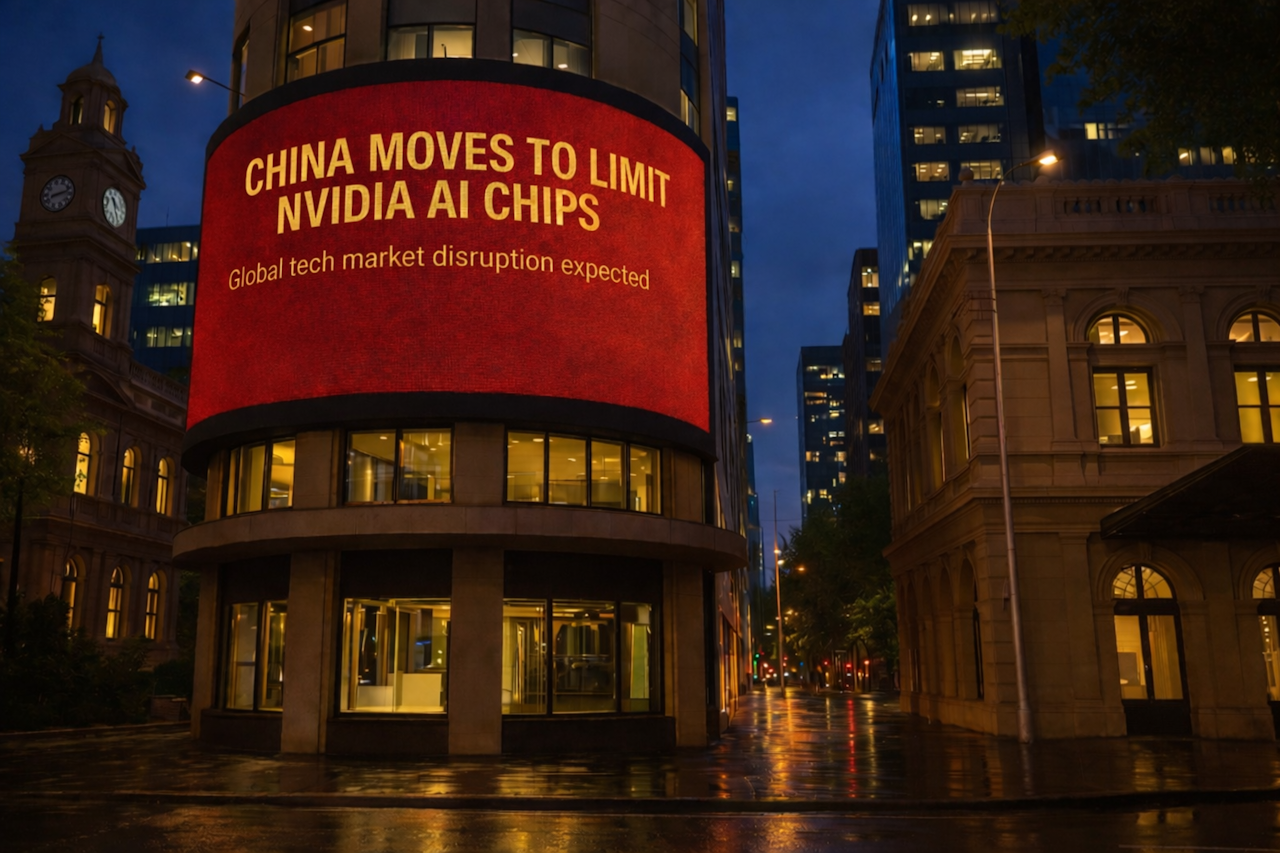

Beijing’s latest tech squeeze narrows the pipeline for Nvidia’s H200, likely forcing local AI players to chase substitutes, pay more, or wait longer.
Recent signals from Beijing indicate a shift in the country’s stance towards advanced AI chip technology. According to a Reuters report, Chinese authorities are stepping up efforts to limit the inflow of Nvidia’s H200 chips—a move that appears designed to boost domestic alternatives and tighten control over sensitive technologies. Some analysts suggest that this regulatory decision may be as much about preserving national security as it is about promoting local semiconductor innovation, although such claims remain under debate.
Impact on AI Development
The H200 chip, known for its high performance in machine intelligence applications, is a key ingredient for many AI systems around the globe. With Beijing potentially curtailing access, local AI developers may find themselves in a challenging position. As reported by the Financial Times, companies reliant on these advanced chips will have to either adjust by sourcing technologically inferior substitutes or wait for domestic chipmakers to scale up their capabilities. This is expected to delay projects and increase costs, inevitably impacting innovation across sectors from autonomous vehicles to data centre operations.
Supply Chain Disruptions
Supply chain constraints in the semiconductor space have already made headlines in recent years, but this move underscores the vulnerability of global supply lines. The decision to restrict the H200 chip could further complicate the network of international trade. As noted by Bloomberg, sanctions and export controls have historically forced tech companies to re-evaluate their supply chains. In China, this recalibration may prompt manufacturers and developers to invest more heavily in local R&D, thereby accelerating investments in alternative semiconductor technologies.
Domestic Alternatives
One of the motivations behind Beijing’s latest move appears to be a desire to reduce reliance on foreign technology amid escalating geopolitical tensions. Chinese tech firms have been under growing pressure to cultivate their own high-performance computing components. Asia Times outlines that the current restrictions might propel domestic manufacturers to invest in research that could yield competitive alternatives to Nvidia’s sophisticated offerings. However, many industry experts caution that replacement technologies may take time to reach the performance levels required, potentially stalling the country’s ambitious AI roadmap.
Industry Reactions
The ripples of Beijing’s decision are being felt both at home and abroad. Local startups and established tech giants alike are reassessing their production and sourcing strategies. While some industry insiders applaud the move as a necessary push for homegrown innovation, others fear that it may stifle competitiveness in the interim. A Reuters analysis suggests that the disruption could force Chinese companies to pay a premium for alternative chips, potentially narrowing profit margins and delaying key projects in the AI arena.
International Ramifications
The decision has wider implications for global technological leadership. By limiting access to cutting-edge components such as the Nvidia H200, China is not just recalibrating its internal tech ecosystem but also challenging the established patterns of global tech trade. The action is likely to unsettle international markets, notably those in the United States and Taiwan, where a significant portion of semiconductor production is concentrated. As highlighted by Bloomberg, there is speculation that such measures might ignite further retaliatory policies, potentially altering the landscape of tech politics and trade for years to come.
Future of AI Innovation
Despite the challenges presented by restricted H200 chip access, the current climate may also serve as a catalyst for breakthroughs in AI hardware. Local companies are under growing pressure to innovate and develop their own alternatives to ensure business continuity. Academic institutions and private sector R&D centres have already begun collaborative projects aimed at bridging the gap left by Nvidia’s products. As this paradigm shifts, it will be important to monitor how competitive dynamics evolve in both China and the global market. Rivalries in semiconductor technology are intensifying, and the long-term effects of this move on AI performance standards could be significant.
In summary, Beijing’s decision to limit access to Nvidia’s H200 chips signals a strategic pivot in the nation’s technology policy. While the immediate consequences may include supply chain disruptions, increased costs, and project delays for local AI developers, the long-term objective appears to be a drive towards enhanced domestic innovation and self-reliance. As global tensions continue to influence tech policies, stakeholders at every level—from government agencies to private firms—will need to navigate an increasingly complex landscape, balancing short-term challenges with long-term aspirations.
With the situation evolving rapidly, industry watchers remain cautious but hopeful that the pressure on both international and local fronts may ultimately forge a more robust, self-sufficient tech ecosystem.