
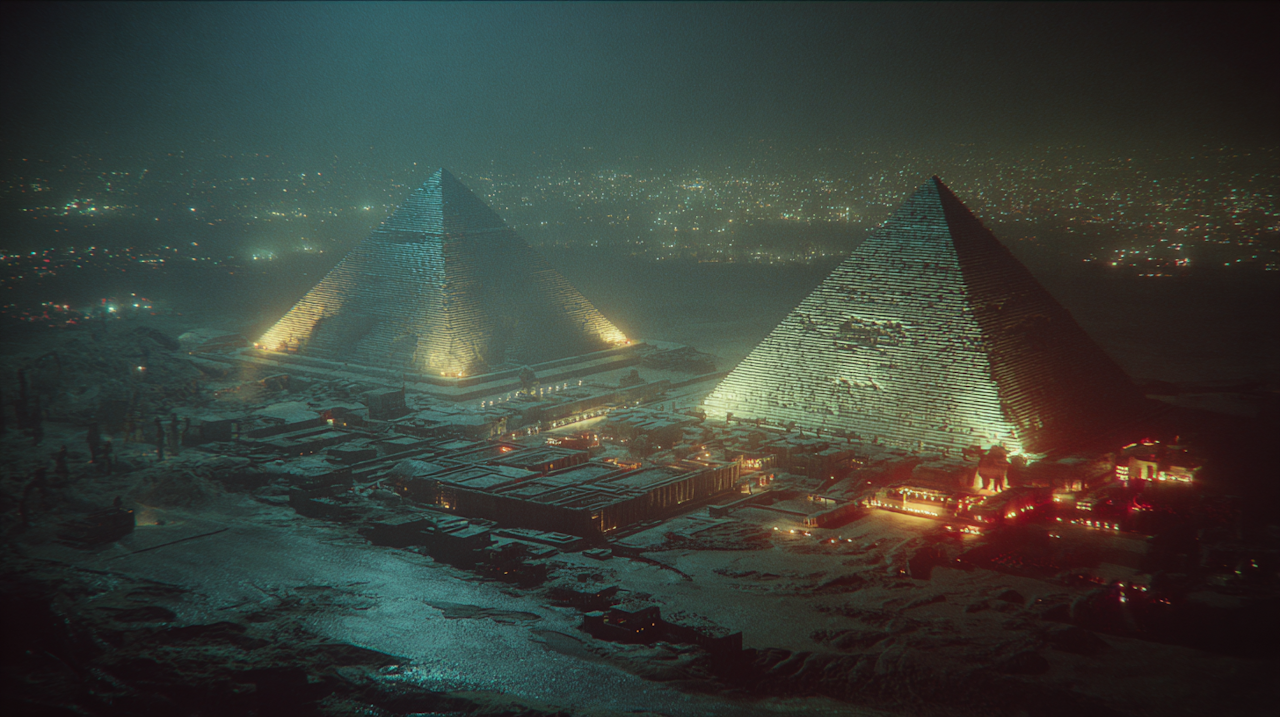

Advanced AI systems are digitally rebuilding the legendary Seven Wonders of the Ancient World, blending cutting‑edge computation with deep historical context. These state‑of‑the‑art recreations reimagine icons such as the Great Pyramid and the Hanging Gardens, marrying deep learning techniques to centuries‑old cultural narratives.
The results deliver fresh vantage points on antiquity, rendering lost grandeur with vivid, modern clarity. It is a meeting of craft and code, where data‑driven models take cues from recorded memory to revive the past without trespassing on its mystery.
What’s in the box
Recent advances have cleared a path for what looks like the most immersive restoration effort yet. As reported by the Greek Reporter, researchers are deploying neural networks and computer vision to re‑envision structures including the Lighthouse of Alexandria and the Statue of Zeus.
Models are trained on broad corpora of historical records and archaeological findings, enabling careful reconstruction of missing details. The aim is an enriched, interactive experience for scholars and enthusiasts alike, with AI serving as a patient collaborator rather than a domineering auteur.
Why this matters
The digital resurrection of the Seven Wonders is not merely a technical stunt; it carries cultural and educational heft. Immersive reconstructions can deepen understanding of ancient civilisations, while showcasing how AI can support responsible heritage preservation and public learning.
Context from outlets such as Reuters and analysis from Forbes frame the work within a wider conversation about how modern tools can honour the past. The project points to new academic pathways that respect history’s contours while making them newly legible.
Under the hood
At its core sits a disciplined blend of deep learning and computer vision. Datasets assembled from historical documents and archaeological records feed models that learn visual and structural patterns, then propose plausible infill for fractured or missing elements.
The process is iterative. As fresh material is catalogued or scholarship evolves, the AI updates its reconstructions, steadily aligning outputs with the best available research while retaining traceability of changes.
Guardrails
Cutting‑edge systems demand strong governance. The project follows strict data‑protection practices, applying robust encryption and data anonymisation across collection and processing to protect both historical and contemporary material.
Ethical considerations guide decisions about what to reveal, how to contextualise it, and where to draw lines around sensitive cultural information. Transparency is maintained through regular audits and oversight by dedicated ethics committees, underscoring a commitment to responsible AI alongside historical integrity.
Roadmap
Expect deeper collaboration between technologists, archaeologists, and historians as the reconstructions mature and datasets expand. Working theory: future releases may include interactive virtual tours, augmented reality layers, and continually refined models as new evidence surfaces.
For ongoing coverage of AI‑driven cultural restoration and related progress, track updates via the FineSkyAi Neural Network News Archive.