
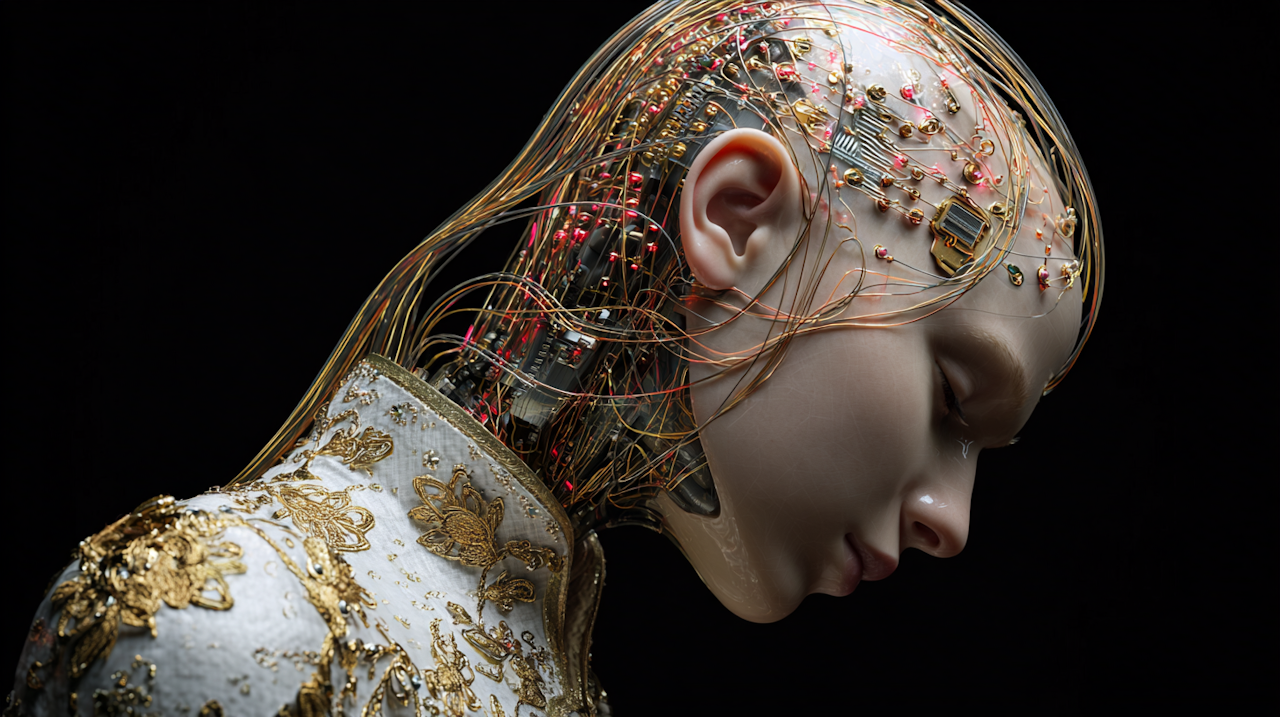

Artificial intelligence sits at the centre of global debate. It’s undeniably boosting productivity and enabling new tools, yet it also raises difficult questions about privacy, discrimination and accountability. Recent work from Charles Darwin University argues that today’s systems don’t “understand” the way humans do, and that the opacity of many models can undermine people’s ability to contest harmful decisions. As revealed in the ScienceDaily release, the takeaway is this: AI is powerful and useful—but it needs firm guardrails.
What’s New
Evidence continues to show meaningful, task‑level gains. In a large real‑world deployment, customer support agents using an AI assistant resolved issues ~14% faster on average, with the biggest benefits for less‑experienced workers. In controlled experiments, professionals doing mid‑level writing tasks finished work substantially faster and produced higher‑quality drafts when using a chatbot. NBERMIT Economics
Healthcare is also seeing measured, prospective results. A nationwide, real‑world study found AI‑supported double reading in mammography increased cancer detection rates without increasing recalls—promising, but still requiring careful integration and oversight. Nature
On the governance side, Europe’s AI Act entered into force in 2024 and is phasing in obligations. Rules for general‑purpose AI (GPAI) models began applying in August 2025, with broader requirements arriving through 2026. Regulators have signalled there’s no pause coming. Digital Strategy, Reuters
Why It Matters
Treating AI as either miracle or menace misses the point. Systems that predict plausible outputs are not people; they don’t possess human‑style intent, memory or empathy. That matters when outputs influence credit, employment, welfare, policing or healthcare. Researchers warn that “black‑box” decisions can make it hard for individuals to understand or challenge outcomes that affect their rights and dignity. ScienceDaily
The risks aren’t hypothetical. Investigations and incident databases document wrongful arrests linked to over‑reliance on facial recognition matches, prompting new limits and policy responses. The lesson is simple: when AI informs consequential decisions, human oversight and corroboration aren’t optional. The Washington Post, AP News, Incident Database
How It Works (and Where It Breaks)
Most modern AI—especially large language models—works by learning statistical patterns from vast datasets and predicting the next token (word, pixel, etc.). That’s enormously useful for drafting, summarising and pattern spotting, but it also means systems can be confidently wrong, reflect training‑data biases, or fail in unfamiliar contexts. These are engineering systems, not thinking beings—so their strengths (speed, scale, pattern recognition) and weaknesses (opacity, brittleness, bias) must both be designed around. NIST Publications
Privacy & Safety
Good news: practical, testable guardrails exist. The NIST AI Risk Management Framework sets out a clear cycle—govern, map, measure, manage—to identify risks, choose controls, and document decisions, and NIST has issued a companion profile for generative AI. In health, the WHO has published ethics and governance guidance tailored to large multimodal models. These aren’t silver bullets, but they convert vague “be responsible” slogans into concrete processes and artefacts—risk registers, evaluations, incident reporting and clear accountability. NIST Publications, World Health Organization
Regulation is tightening too. Under the EU AI Act, bans on certain practices are already live, GPAI obligations now apply, and high‑risk uses face documentation, data‑quality, and human‑oversight requirements as deadlines roll in. Outside the EU, approaches remain more patchwork—often voluntary frameworks plus executive guidance—so organisations deploying AI should assume rising expectations on transparency, evaluation, and data governance. Digital Strategy
What’s Next
Expect two things in tandem: broader adoption and stricter accountability. Adoption will keep spreading where AI measurably helps—customer service, drafting, coding assistance, imaging triage—especially for junior staff. At the same time, regulators and buyers will push for proof: capability evaluations, bias and safety testing, incident reporting, and public summaries of training data sources where required. The winners will be teams that pair well‑instrumented models with disciplined processes and human judgment. NBER, MIT Economics, Digital Strategy
Bottom Line
AI is neither an existential saviour nor a doom machine. It’s a general‑purpose technology with real, demonstrated benefits—and real, demonstrated failure modes. Treat it like aviation: celebrate the lift, engineer for the turbulence, and never skimp on the checklist.